I tried Decopy AI Humanizer to make some AI-written content sound more natural, but the results still feel awkward and easy to spot. I need help figuring out whether I’m using it wrong or if it just doesn’t work well compared to other AI humanizer tools. Looking for honest feedback, real user reviews, and advice before I waste more time on it.
Decopy AI Humanizer
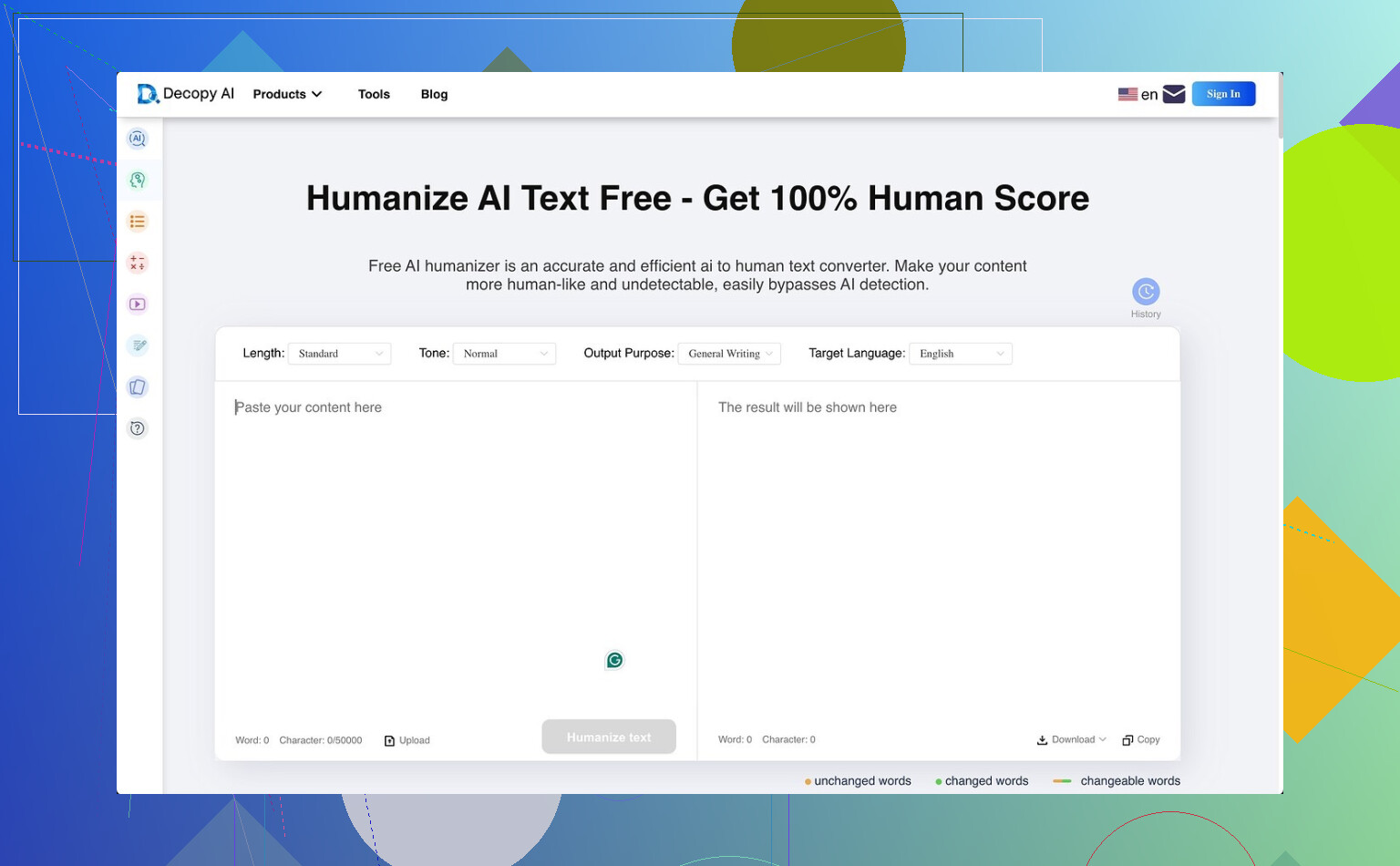
I spent some time with Decopy AI Humanizer, and on paper it looks stacked. You get 500 free runs, up to 50,000 characters in one shot, eight tone options, nine purpose presets, and a sentence rewriter for fixing one line at a time. For a free tool, I thought, ok, this is generous.
Then I ran the outputs through detectors.
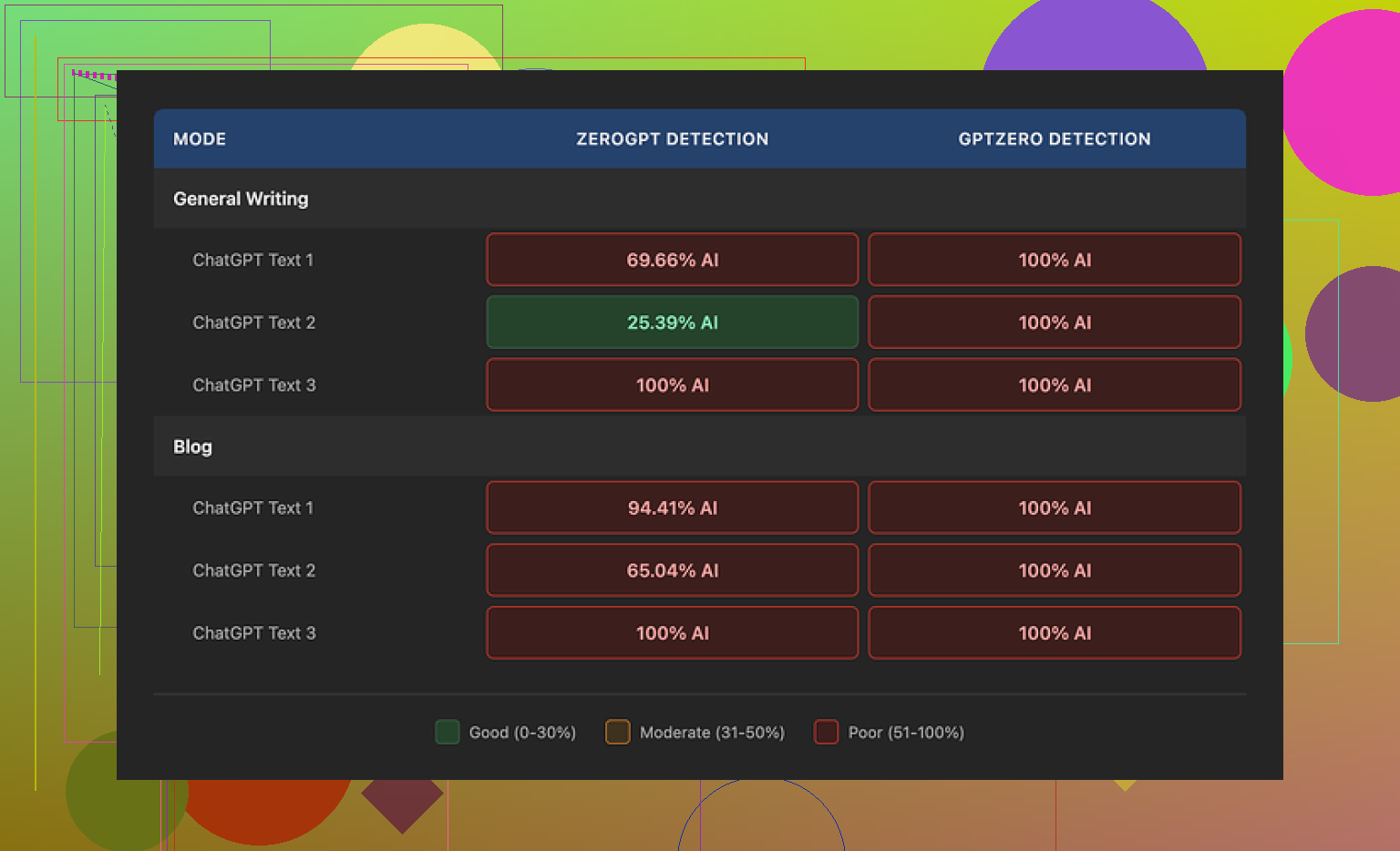
That part fell apart fast. GPTZero marked every sample as 100% AI, both in General Writing and Blog mode. ZeroGPT bounced around more, roughly 25% to 100%, depending on the passage. So if your goal is to dodge AI flags, I did not see proof of it here.
Where Decopy did better was basic readability. It did not wreck grammar. I noticed fewer weird mistakes than with tools like UnAIMyText and HumanizeAI.io. In my notes, Blog mode came out around 7/10 for writing quality, and General Writing was a bit higher at 7.5/10.
The problem was the tone. Blog mode felt watered down, almost like it was aiming at a small kid instead of a normal reader. General Writing was less awkward, but it still dropped phrases like ‘digital stuff’ and ‘totally changing tech,’ which made the text feel flimsy. Not broken. Flimsy. One small plus, it usually kept the length close to the source, so I did not have to rebuild the structure after each pass.
I also checked the privacy side. The policy gives a plain three-month retention window and says it follows GDPR and CCPA. I liked seeing a specific timeline. What I did not find was a clean explanation of what happens to the text you paste in for rewriting.
After testing it next to other options, Clever AI Humanizer gave me stronger results on humanization, and I did not have to pay for it.
1 Like
You’re not using it wrong. Decopy helps more with smoothing grammar than making text feel human.
My take is a bit different from @mikeappsreviewer. I don’t think detector scores are the main issue. Detectors swing a lot and miss context. The bigger problem is rhythm. Decopy tends to flatten sentences, swap in soft filler words, and remove the small quirks people use without thinking. That makes the output feel “processed.”
A quick test for your own text:
- Read it out loud.
- Mark any phrase you would never say.
- Cut 10 to 15 percent of the words.
- Add one concrete detail per paragraph.
- Mix sentence length.
If Decopy gives you “clean but bland,” use it only for first-pass cleanup. Then rewrite the intro, topic sentence, and ending yourself. Those are the spots people notice first.
Also, stop feeding it polished AI copy. Feed it rough notes or an outline. It handles messy input a bit beter than polished text, from what I saw.
So, no, it’s not totaly useless. It’s also not a fix-all tool. It’s a light editor wearing a bigger label.
I don’t think you’re using it wrong. I think Decopy just sits in that awkward middle zone where it fixes surface stuff but doesn’t rebuild voice.
I agree with parts of what @mikeappsreviewer and @cacadordeestrelas said, but I’d push it a little further. The main tell is not only blandness. It’s consistency. Real people are inconsistent in tiny ways. Decopy tends to make every paragraph sound equally polished, equally safe, equally ‘acceptable.’ That uniform vibe is what makes it stick out fast.
One thing that helped me test tools like this was comparing sentence intent, not just wording. Ask:
- did it keep the original opinion strength?
- did it keep any subtle sarcasm or hesitations?
- did it keep the same level of specificity?
If the answer is no, the text starts feeling fake even when the grammar looks fine.
My take: use Decopy for trimming stiffness, not for final output. If you want more natural writing, do a human pass that changes viewpoint, examples, and emphasis, not just words. Also, weirdly, leaving in one or two slightly imperfect sentences can make copy feel more real. Super smooth writing can be a red flag too lol.
So yeah, probably not user error. More like the tool overpromises and underdelivers a bit. Not total garbage, just not doing the full job ppl expect.
I lean toward “it works, but only on the outer layer.” I slightly disagree with the idea that awkward output always means the tool failed. Sometimes the real issue is mismatch. If your source text already has generic structure, Decopy AI Humanizer just rephrases generic into different generic.
What I’d test is this:
- Give it a paragraph with an actual opinion, not neutral explainer copy
- Compare whether it preserves your stance or turns it into safe mush
- Check noun choice, not just sentence flow
That last part matters a lot. A lot of these tools swap specific words for vague ones, and that is where the human feel drops off.
Pros for Decopy AI Humanizer:
- fast
- decent grammar cleanup
- useful for rough simplification
- free usage is pretty generous
Cons:
- weak voice retention
- tends to over-soften phrasing
- output can feel uniformly processed
- not reliable if your goal is stronger personality
I think @cacadordeestrelas, @sonhadordobosque, and @mikeappsreviewer are basically circling the same truth from different angles. My version is simpler: Decopy is closer to a paraphraser than a real voice restorer.
If you want a practical use case, use it after you draft badly, not before you publish. If you want a cleaner read with less robotic texture, Clever AI Humanizer is worth testing too, especially if readability is the main target rather than just detector chasing.