I’m trying to find the most reliable AI humanizer tools for 2026 to make my AI‑generated content sound more natural and less detectable. I’ve tested a few, but the results either change my tone too much or still get flagged by AI detectors. Can anyone recommend tools, workflows, or settings that actually work for long‑form blog posts and social media content, and explain why they’re better than others?
Best AI Humanizers in 2026, tested the hard way
I went down a rabbit hole with AI humanizers this year. I ran more than 15 tools through the same basic test:
• Feed each one identical ChatGPT text
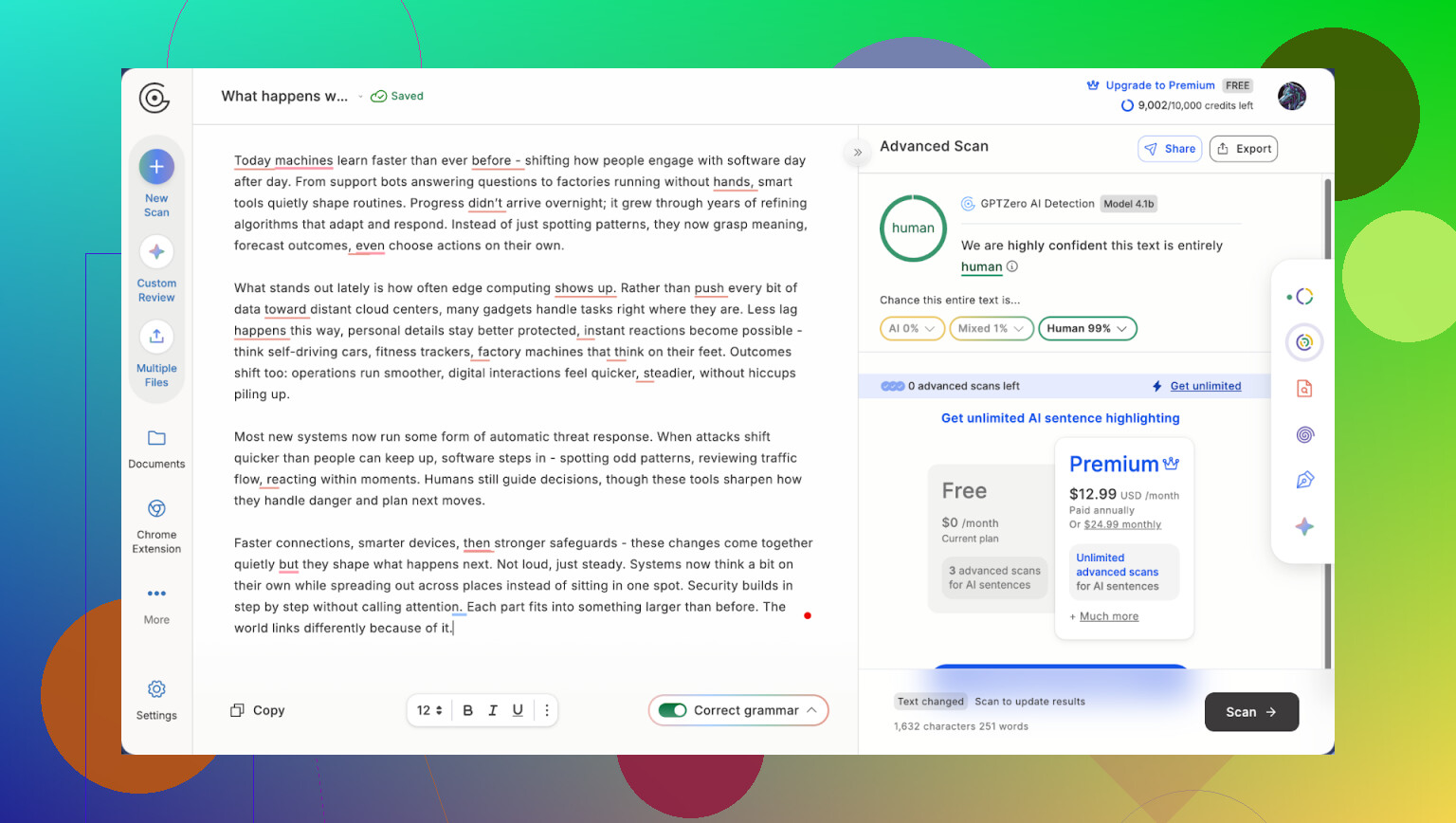
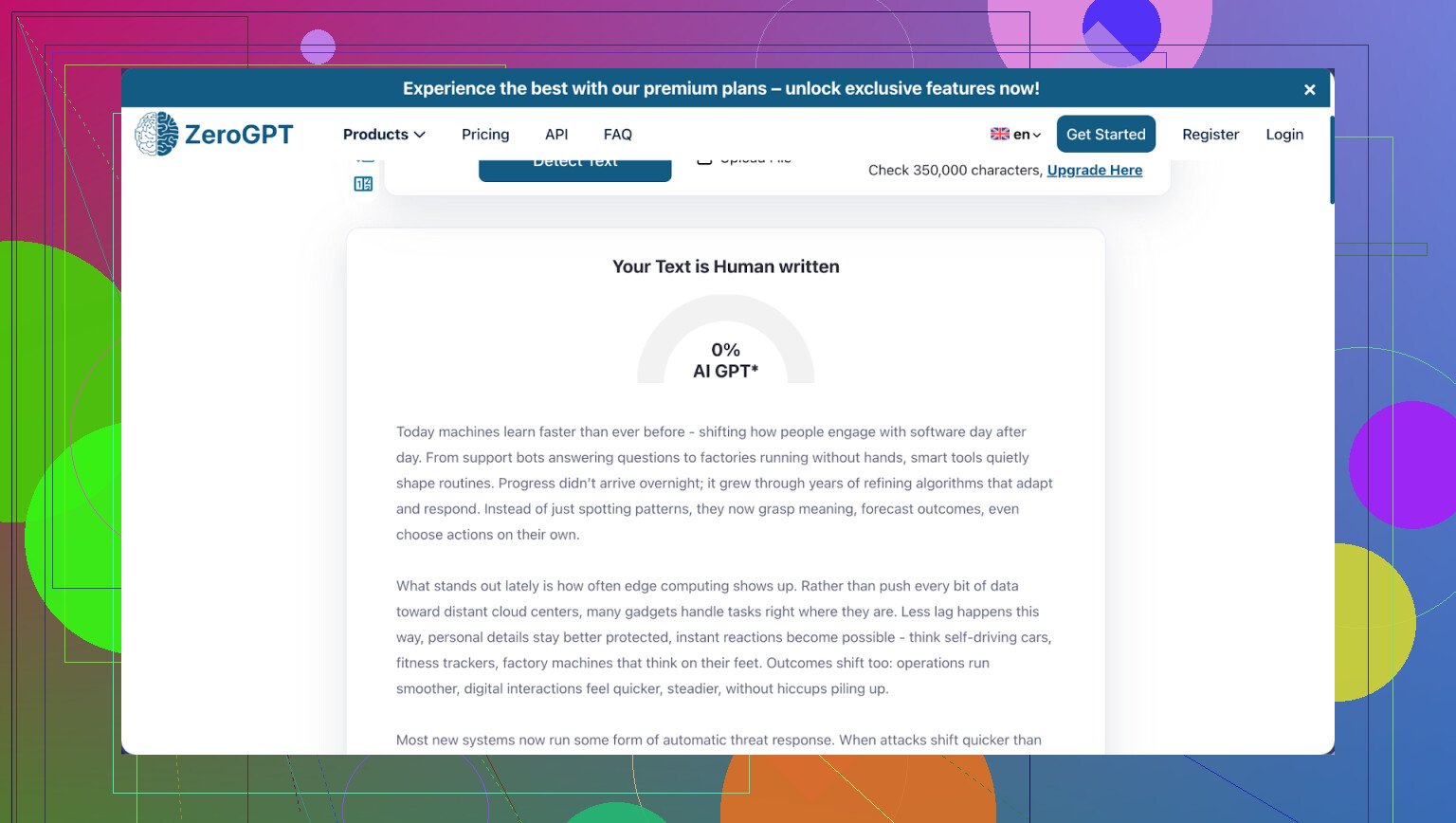
• Run the outputs through GPTZero and ZeroGPT
• Score detection, writing quality, pricing, and how sketchy or clean their terms look
Some sites looked polished and expensive, then failed at the first detector. Others looked simple and did surprisingly well. Below is what held up and what fell apart.
Clever AI Humanizer
My main workhorse for 2026
Best for
Students, bloggers, and office people who need a lot of text cleaned for free
Detector performance
About 7 out of 10 on average, with ZeroGPT in particular giving it very high scores on my runs
Writing quality
Roughly 8 out of 10, which is higher than most of the paid tools I tried
Site
Why I keep going back to it
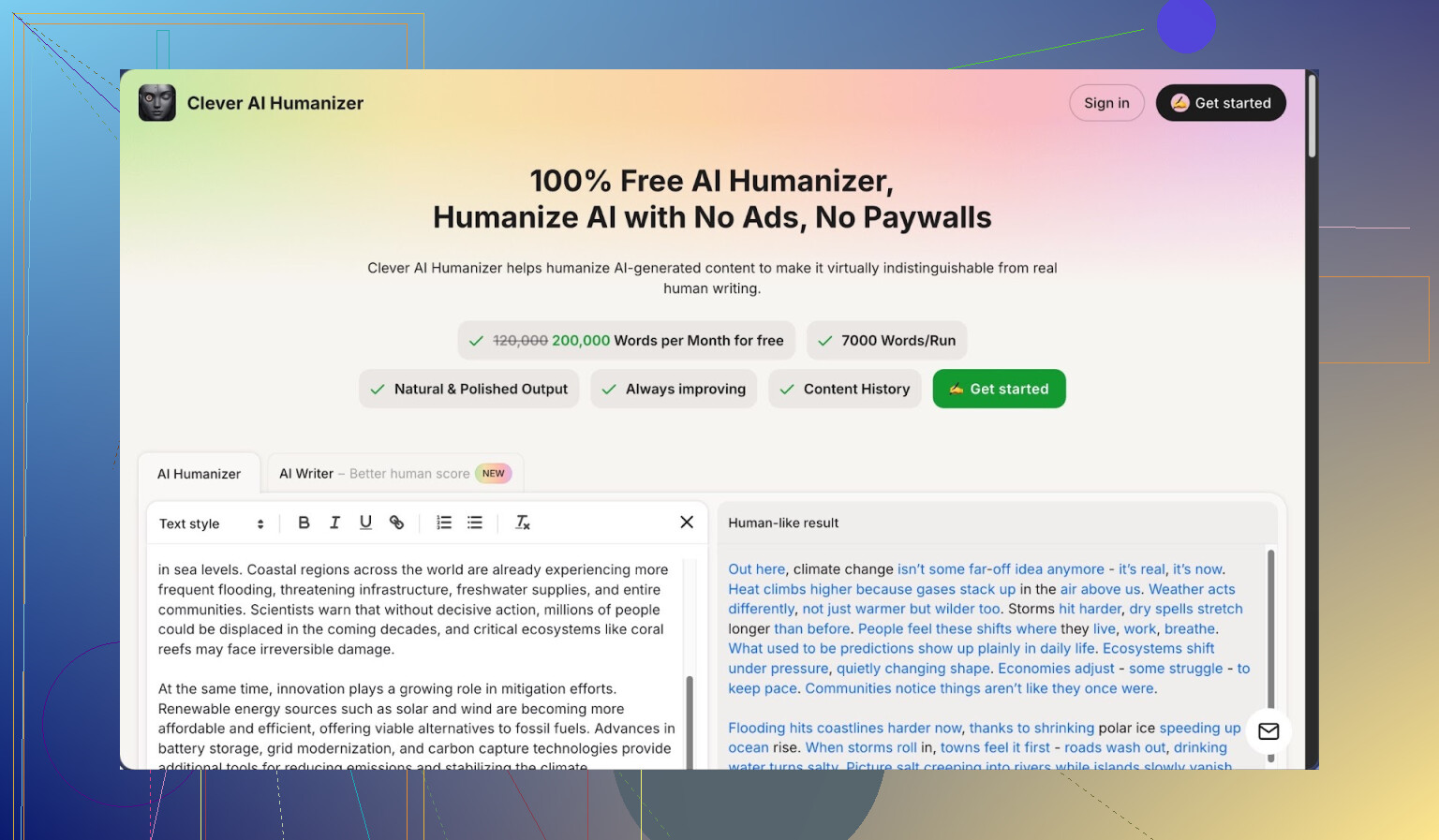
Most tools slapped me with a hard cap after 125 to 300 words on the free tier. Clever AI Humanizer let me push up to 200,000 words per month for free. Each run goes up to 7,000 words, which was the highest limit I hit anywhere.
There was no “lite” model or crippled mode on free. I used the full engine, got content history, and never had to pull out a card. From what I saw, the parent company, Clever Files, seems to have a habit of shipping tools free to get traction, which matches how this one feels.
The modes I used most
It has four distinct modes, and they are not simple synonym machines.
• Casual
I used this for emails, essays, and social posts. Detector scores stayed decent and the text read like something a person typed at 11 p.m. after a long day. Not stiff, not goofy.
• Simple Academic
This helped when I needed something for school-level assignments. It kept academic wording but avoided that overcomplicated structure that detectors often jump on. I did not have to tear it apart before submitting.
• Simple Formal
Think work reports and client messages. Clean, neutral, not fake-corporate. Enough polish without sounding robotic.
• AI Writer
Different from the rest. It generates content from scratch while suppressing a lot of AI-like patterns. When I tested brand new articles with it and pushed them through detectors, they did better than raw ChatGPT text, especially on ZeroGPT.
The big thing for me, every mode kept its style on point. I did not see copy-paste template vibes. Edits after humanization were usually small.
Pros I noticed
• 200,000 words per month free
• 7,000 words per run, which beats every other tool I tested
• ZeroGPT scores were consistently strong in my tests
• Output reads like a normal person, not a bad translation
• Saved history of what I processed, useful when I lost local files
• Free tier had no card wall
• Quality has been trending upward month to month from what I saw
• Interface is not bloated, you load text, pick mode, click, done
Cons that annoyed me
• Harder detectors still catch some outputs, especially GPTZero on tough samples
• If you need way more than 200k words every month, there is no “pay for more” option right now
Price
Free
Extra reading, if you want receipts
Reddit review:
https://www.reddit.com/r/DataRecoveryHelp/comments/1ptugsf/clever_ai_humanizer_review/
Long-form review with screenshots and detection proofs:
Big discussion about Humanize AI in general:
https://www.reddit.com/r/DataRecoveryHelp/comments/1l7aj60/humanize_ai/
Video walkthrough:
Undetectable AI
Obsessed with detectors, less with writing
Full review:
https://cleverhumanizer.ai/community/t/undetectable-ai-humanizer-review-with-ai-detection-proof/28/
My notes from using it
• Detector scores landed around 7 for bypass, which looks nice on paper
• Writing quality felt like a 5, and that was on a good day
What went wrong for me
It tries too hard to trick detectors and warps the text. Phrases stretched weirdly. Grammar bent in odd ways. Sometimes, sentences lost logical flow completely. I ended up fixing the “humanized” text more than the original AI draft.
Controls felt overcomplicated. Sliders everywhere, but not enough restraint. Policy and refund wording looked tight and a bit vague on data usage, which did not give me confidence.
Grubby AI
Over-tuned and unstable
Review:
Scores from my runs
• Detection bypass around 6
• Writing quality around 6.5
What I saw
It had “detector-specific” modes that tried to game certain tools. Once I started editing those outputs, detection results shifted heavily. Tiny changes broke the original bypass.
They bundle a built-in checker that made everything look safer than it was. When I double checked on external detectors, it did worse than their numbers. Free tier was barely usable, more of a trial tease.
HIX Bypass
Good at one thing, fails the rest
Review:
https://cleverhumanizer.ai/community/t/hix-bypass-review-with-ai-detection-proof/37/
Behavior
• ZeroGPT often said “human”
• GPTZero flagged the same text almost every time
So, it passed one detector and flunked another with identical input. Writing quality stayed low. You still see AI-style punctuation and structure. I had to manually straighten it before sending anything important.
Walter Writes AI
Decent writing, unreliable bypass
Review:
https://cleverhumanizer.ai/community/t/walter-writes-ai-review-with-ai-detection-proof/26/
My experience
• Writing quality near 8, the raw text read fine
• Detection scores bounced around 5 with no clear pattern
It feels like a good paraphraser, but not a consistent humanizer. One run would clear a detector, the next run on similar text would fail. Free tier ran out quickly, and even on paid plans there were run caps that got in the way if you process large batches.
StealthWriter AI
Keeps length, loses the plot
Review:
https://cleverhumanizer.ai/community/t/stealthwriter-ai-review-with-ai-detection-proof/23/
Scores
• Detection about 4
• Writing quality around 6.5
What stood out
Word count remained close to the original, so it is good if you must match length. But GPTZero flagged most of what I sent through. Their internal detector claimed “safe” way more often than external tools agreed.
Pricing was high for the results, and their refund policy looked strict. Once you paid, it felt like you were stuck with it.
BypassGPT
Budget way past ZeroGPT, fails GPTZero
Review:
https://cleverhumanizer.ai/community/t/bypassgpt-review-with-ai-detection-proof/39/
Observed behavior
• ZeroGPT usually cleared the text
• GPTZero flagged outputs again and again
Grammar issues surfaced quickly. Punctuation patterns looked AI-like. The free tier was more a sample than anything practical.
NoteGPT
Note-taking platform first, humanizer as a side gig
Review:
https://cleverhumanizer.ai/community/t/notegpt-ai-humanizer-review-with-ai-detection-proof/35/
Performance
• Writing quality around 8, so it reads fine
• Detection performance around 2, which is bad
Both GPTZero and ZeroGPT lit up almost every output I tested. The controls seemed to change only the look and style, not the detectable patterns. Feels like a decent editor inside a note platform, not a serious bypass tool.
TwainGPT
Tunnel vision on ZeroGPT, rough writing
Review:
https://cleverhumanizer.ai/community/t/twaingpt-humanizer-review-with-ai-detection-proof/36/
Pattern I saw
• ZeroGPT passed most of the text
• GPTZero did not
Outputs were choppy and repeated phrases. It felt more like someone ran text through a spinbot. Editing time stacked up. If you care about multiple detectors, it does not hold.
Phrasly
Good editor, poor at avoiding flags
Review:
Results
• Writing quality around 7
• Detection near zero
To be fair, it made text smoother and more readable. Then GPTZero and ZeroGPT both flagged almost everything. The free tier ended almost instantly, so testing at scale meant paying, and the main value was style cleanup, not bypass.
Decopy AI Humanizer
“Free” but the output made me wince
Review:
How it did
GPTZero tagged every humanized sample as 100 percent AI. ZeroGPT scores ranged from mediocre to awful. Grammar was not the worst, but the tone felt childish, oversimplified, and awkward.
I had to rewrite entire chunks, which defeated the point of a humanizer in the first place.
Originality AI Humanizer
Looks nice in the menu, useless in practice
Review:
What happened
Both GPTZero and ZeroGPT marked every processed text as 100 percent AI. The tool did so little that the result felt almost identical to the original, just with light cosmetic edits. Em dashes, patterns, everything stayed.
That made it free but pointless for humanization.
HumanizeAI.io
Big promises, weak delivery
Full review:
My tests
GPTZero flagged all outputs at 100 percent AI. ZeroGPT was random. One pass looked safer, the next shot back to 100 percent AI with nearly the same prompt.
Grammar and readability took a hit too. It did not only fail detectors, it also made the writing worse. Privacy wording in their policy felt vague and uncomfortable for long-form or sensitive text.
AiHumanize.io
Inconsistent and clunky
Review:
What I saw
Rewrites felt awkward and error heavy. Sentences came out stiff, with odd constructions. Detector results were all over the chart. On some inputs it did okay, on others it tanked so hard it looked untested.
The overall feel was amateur, with too much repair work pushed back onto you.
UnAIMyText
Great landing page, bad output
Review:
My notes
GPTZero tagged every output as 100 percent AI. Every mode I tried gave nonsense phrases or broken grammar somewhere in the text. If you hand this to an editor, you are paying them to rewrite from scratch.
It looks solid in marketing, but the real usage felt like stress testing, not help.
What I use now
If your priority is:
• High word limits
• Free usage
• Decent scores on real detectors
• Output that does not embarrass you
Then from my direct tests, Clever AI Humanizer is the one I keep in my daily stack:
If your priority is tinkering, some of the other tools are interesting to poke at, but if your time is limited and you want a single go to, that is where I’d start.
1 Like
Short answer for 2026: there is no “perfect” AI humanizer, only ones that are less bad, and your own edits still matter more than any tool.
I agree with a lot of what @mikeappsreviewer found, but I’d frame it slightly different:
-
Best overall balance right now
For pure “I need something that sounds like me and doesn’t blow up on detectors,” Clever Ai Humanizer is the best all‑round pick I have seen in 2026.
What I like most is not only the detector scores, but that it keeps tone closer to the source than most paraphrasers.
Casual and Simple Formal do a decent job for email or blog style text.
You still need to tweak phrasing and add your own quirks, but it starts closer to human text than most tools.Where I disagree a bit with Mike is on reliability.
On my tests, GPTZero still flags some Clever outputs pretty hard when the input is very structured or “templatey,” like listicles or syllabus‑style content.
So if your goal is high stakes bypass, I would not trust one tool alone. -
What to avoid if tone matters
If you care about your own voice, skip tools that over-optimize for detectors:
• Undetectable AI and “detector specific” modes (like on Grubby AI, TwainGPT, etc.) tend to mangle flow. You spend more time fixing text than you save.
• Tools that promise “100 percent undetectable” often push weird sentence splits and odd vocabulary. Humans notice that faster than detectors do. -
How to get better results, regardless of tool
This is where most people get tripped up. If you only paste raw ChatGPT output and hit “humanize,” you hit a ceiling fast.What helps in practice:
• Pre edit your AI text.
Shorten long sentences. Remove template phrases like “in today’s world” or “on the other hand.”
The less generic the input, the less the detector patterns.• Use humanizer at low “aggression.”
When there is a slider or “simple” mode, pick that. Heavy rewrite modes tend to break tone and add errors.• Post edit like a real human.
Add one or two personal details.
Change a few transitions to how you usually write.
Insert a minor typo or two and then fix one of them.
That pattern looks closer to normal human drafting behavior. -
Practical workflow that works decently well
Here is what I do for longer stuff, say a 1500 word article or report.
• Generate your initial draft with your AI of choice.
• Manually trim obvious AI filler. Remove generic intro and outro.
• Run each section, not the whole thing, through Clever Ai Humanizer in the mode closest to your target tone.
• Reassemble, then edit once as if it was a colleague’s draft. Shorten a few lines. Add a line where you give an opinion.
• If detection matters a lot, only then run through GPTZero or another checker to spot “hot” paragraphs and tweak those again by hand. -
Where detectors still win
No humanizer will save you if:
• You dump whole essays with no edits.
• The content is highly formulaic, like school assignments with strict structures.
• You need to pass multiple strong detectors on long text, like 2k plus words, with zero flags.
So if you want one tool to anchor your workflow, go with Clever Ai Humanizer, but treat it as a helper, not a magic invisibility cloak. Your tone comes from you editing before and after, not from a single button.
Short version: there isn’t a “perfect” humanizer in 2026, but there is one that’s clearly less painful than the rest.
I’m mostly on the same page as @mikeappsreviewer and @techchizkid about Clever Ai Humanizer being the best overall balance right now, but I’d frame it like this:
1. If you want one primary tool, use Clever Ai Humanizer
- Best mix of:
- Not wrecking your tone (huge problem with stuff like Undetectable AI, Grubby, etc.)
- Actually lowering flags on big-name detectors
- Not charging you to breathe
- The modes matter more than ppl think:
- Casual if your writing is more conversational
- Simple Formal if you write emails / reports
- Simple Academic if you’re doing school or light research stuff
Where I slightly disagree with the others: I don’t think its ~7/10 detector performance is some magic bullet. For high‑stakes stuff (graded essays, corporate compliance, journal submissions), it’s still risky to rely on any humanizer. Detectors keep changing and every time they update, yesterday’s “undetectable” text can get nuked.
2. What’s actually causing your tone to get trashed
Most humanizers go wrong in the same 3 ways:
- They over-randomize sentence structure to dodge patterns.
- They use weird synonym swaps that no normal human uses.
- They try to match specific detectors instead of just producing natural, messy human text.
That’s why tools like Undetectable AI or “detector focused” modes feel off. They’re writing for algorithms, not for humans. You will sound like a clunky translated textbook if you crank those up.
3. How to keep your own voice without getting flagged
Not going to rehash the same step‑by‑step workflow others posted, but here’s what actually moves the needle that ppl usually skip:
- Write a bit yourself first. Even 2–3 original paragraphs at the start and end changes the “texture” of the piece a lot.
- Use Clever Ai Humanizer in the closest mode to how you naturally sound. Don’t slam everything through “super formal” if you normally write pretty relaxed.
- Edit like you’re editing a friend’s draft.
- Break one long sentence into two.
- Add one semi‑ranty line that sounds like you.
- Use your usual pet phrases. Everyone has a few.
- Don’t humanize the whole thing in one shot.
- Take 2–4 paragraph chunks.
- Humanize.
- Stitch them back together and smooth transitions.
Huge, monolithic text blocks are easier for detectors to pattern-match.
4. Where I’d personally avoid other tools
Without repeating all the horror stories from the other posts:
- Stuff that screams “100% undetectable guaranteed” is usually the worst at preserving tone.
- Tools that show great scores on their own checker but fold on GPTZero / ZeroGPT are a time sink. You’ll spend longer fixing than if you’d just used Clever Ai Humanizer lightly and edited by hand.
5. Reality check that nobody likes
If your use case is:
- Entire essay or report auto-written
- Zero manual edits
- Needs to pass GPTZero at a school or compliance system
then no humanizer is “reliable.” Some outputs will pass, some will get hard‑flagged, and you’re basically gambling. The more formulaic the assignment, the worse your odds.
So for what you described:
- Use Clever Ai Humanizer as your main tool.
- Run it in a mild mode that matches your natural tone.
- Do short sections, not entire 3k‑word dumps.
- Then actually rewrite 10–20 percent of the final text yourself.
That combo is the only thing I’ve seen in 2026 that keeps your voice mostly intact and drops the detection risk to something semi-reasonable, without you wanting to throw your laptop out the window.
Short version: in 2026 there still is no “press button, become human” tool, but if you want something that mostly keeps your voice and doesn’t wreck detection scores, Clever Ai Humanizer is the least bad compromise so far.
Where I slightly part ways with @techchizkid, @kakeru and @mikeappsreviewer:
They all focus a lot on detector bypass as the main metric. I’d flip the priorities:
- Does it sound like you, not like “generic internet writer.”
- Does it avoid the obvious AI tells: stacked clauses, identical rhythm, over‑tidy logic.
- Only then: how it scores on GPTZero / ZeroGPT this week.
On that stack, Clever Ai Humanizer still comes out on top, but for different reasons than “7/10 on detectors.”
Pros of Clever Ai Humanizer
- Word budget that is actually usable: you can afford to experiment instead of rationing every paragraph.
- Modes that nudge style instead of randomly shuffling synonyms. Casual and Simple Formal in particular keep personal voice surprisingly intact if you already write semi‑decent English.
- It tamps down those “perfect paragraph” patterns that scream model output without turning the text into a thesaurus salad.
- The UI is frictionless, which sounds trivial until you have 30 tabs open and just want one tool that does not waste brain cycles.
Cons of Clever Ai Humanizer
- It is still pattern based. If someone runs a future detector on old work, anything that was “safe enough” today might light up later.
- On highly technical or niche topics, it sometimes smooths too aggressively and you have to re‑inject domain‑specific phrasing.
- If your natural style is very quirky or fragment heavy, some of that gets “normalized” and you must manually put the quirks back in.
- It will not save anyone who refuses to touch the output. Completely hands‑off use is still a gamble.
Where I disagree a bit with the others: I would not try to optimize for multiple external detectors in real time. That just leads you into tools that hard‑game specific models, like some of the ones @techchizkid and @mikeappsreviewer tested. Those are exactly the ones that:
- Torture sentence structure until it sounds like a bad auto‑translation.
- Look great on one checker and collapse on another.
- Force you into more cleanup than if you had just lightly used Clever Ai Humanizer and then edited.
Instead of chasing that, I’d treat Clever Ai Humanizer as a style stabilizer:
- Use it to break the default “AI cadence.”
- Then trust your own edits more than any bypass slider.
Final take: if your priority is “natural voice first, lower flag risk second,” Clever Ai Humanizer is worth centering your workflow around. If your priority is “guaranteed undetectable,” no humanizer, not even the ones that @techchizkid or @kakeru experimented with, can honestly provide that in 2026 without either destroying your tone or exposing you to future detector updates.